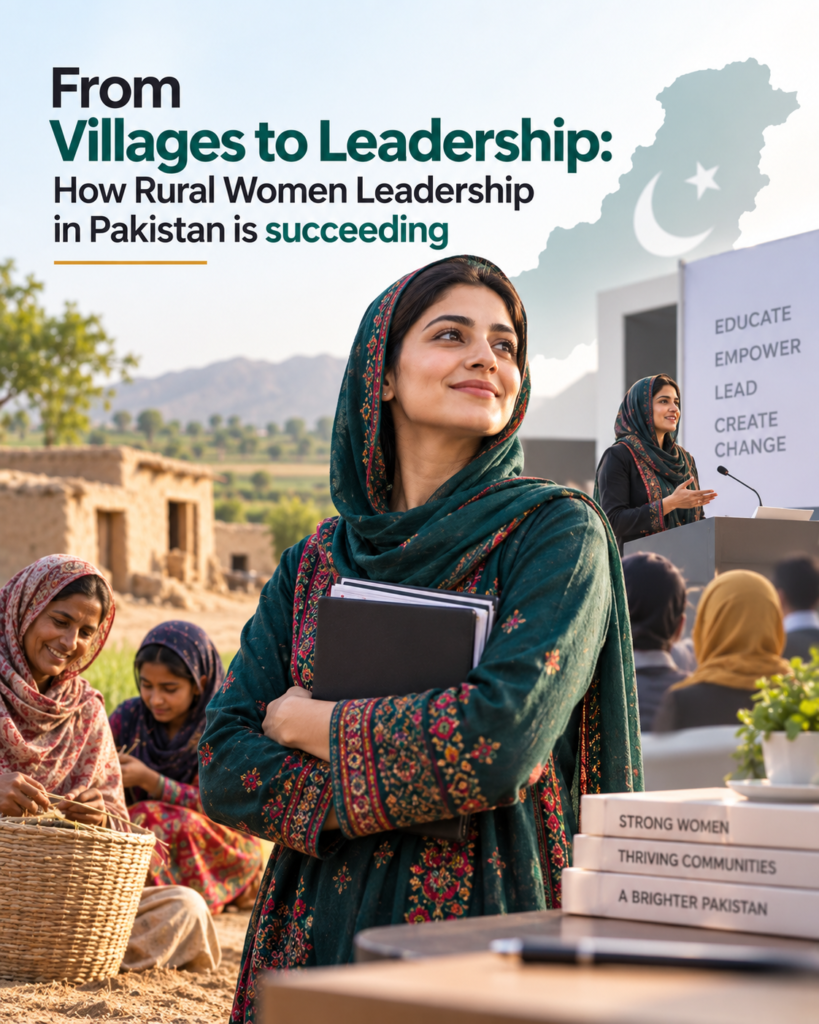
From Villages to Leadership: How Rural Women Leadership in Pakistan is succeeding
In the vast, sun-scorched villages of rural Pakistan, a quiet revolution is unfolding—and the SSW (Social Sustainable for Women) organization is playing a pivotal role in driving this change for rural women leadership in Pakistan. It is not marked by protests or political rallies, but by the steady, determined footsteps of women who are stepping into leadership roles once reserved exclusively for men.
From running community health programs to managing agricultural cooperatives, from leading village councils to launching small businesses, SSW is actively supporting these women by providing the training, mentorship, and resources they need to succeed. Rural women leadership in Pakistan is rewriting the narrative of what leadership looks like. Organizations like the Sustainable Support for Women (SSW) are the ones that are helping them.
The Landscape: Rural Pakistan at a Glance
Deep-rooted cultural norms that define women’s roles primarily as wives and mothers have long made the idea of rural women leadership in Pakistan almost unthinkable. Yet, change is happening—slowly, unevenly, but undeniably—and SSW is at the forefront of this transformation. Registered under the Social Welfare Agencies Act 1961 and certified by the Pakistan Centre for Philanthropy (PCP), SSW is actively changing the landscape of rural women’s leadership through targeted programs and advocacy.
The journey toward rural women’s leadership in Pakistan did not begin overnight, and SSW builds on decades of groundwork while pushing for further progress:
1. Constitutional and Legal Frameworks — Pakistan’s Constitution gives equality between men and women, and the landmark Local Government Act of 2000 reserved 33% of seats for women in local councils (union councils, tehsil, and district levels). This quota system, though imperfect, created a formal space for women in governance for the first time in rural areas. SSW is fighting to keep space for women in different fields of life by ensuring these legal provisions translate into real opportunities.
2. Grassroots Movements and NGOs — Organizations like the Aurat Foundation, Shirkat Gah, and Rural Support Programmes(RSPs) have worked for decades to empower rural women through literacy programs, vocational training, and legal awareness campaigns. SSW builds on this legacy by using rural women leadership in Pakistan to these established networks and amplifying their impact through direct mentorship and community mobilization.
3. Microfinance Revolution — Institutions like Khushhali Bank and NRSP Microfinance Bank have provided small loans to rural women, enabling them to start income-generating activities. SSW understands that economic independence is a powerful catalyst for broader social empowerment, so it actively links women to these financial resources and provides financial literacy training to ensure they can manage and grow their enterprises sustainably.
Economic Constraints
Leadership requires resources—time, money, and mobility. SSW is a kind of organization that is resolving such issues by making rural women, who often work 15–16-hour days managing households, livestock, and subsistence farming, have little time or financial independence to devote to leadership roles.
Institutional Barriers
Even where quotas exist, SSW understands that women councilors often find themselves excluded from meaningful decision-making. Male colleagues may hold parallel meetings, withhold information, or make decisions before women can contribute. The “rubber stamp” syndrome remains widespread.
Security Concerns
In conflict-affected areas like parts of Khyber Pakhtunkhwa and Balochistan, women’s economic participation is further restricted by security concerns regarding women’s mobility, making public leadership roles particularly dangerous. In such remote areas, SSW is doing its best to solve local community’s issues.
The Ripple Effect: Why Women’s Leadership Matters
The impact of women leaders extends far beyond individual achievements:
Improved Service Delivery
Research consistently shows that women leaders prioritize different issues than men—particularly health, education, water, sanitation, and child welfare. A 2021 study by the Pakistan Institute of Development Economics found that union councils with active women members allocated 25-30% more budget to social services compared to those without.
Role Modeling and Aspiration
When young girls see women in leadership positions, their aspirations expand. Microfinance for rural women is also important. A girl who sees a woman councilor or a woman running a successful business begins to imagine possibilities beyond early marriage and domesticity.
Economic Growth
Women’s economic participation is directly linked to national prosperity. The SSW understands that the World Bank estimates that Pakistan could increase its GDP by ~30% if women participated in the workforce at the same rate as men. That is why, it is heling women leaders find jobs, mentor other women, and stimulate local economies.
Stronger Democratic Institutions
Democracy thrives on diverse representation. Female political participation in the rural areas must be enhanced. When women participate in governance, institutions become more responsive, accountable, and representative of the entire population—not just half of it. SSW makes women’s representation at district level easier.
Intergenerational Change
Perhaps most profoundly, women leaders change family dynamics. Their children—sons and daughters alike—grow up with different expectations about gender roles. This intergenerational shift is the most durable form of change. Rural women entrepreneurs are also reshaping the way society works. SSW is helping rural women to create their own startups.
Pathways Forward: What Needs to Happen
While progress is real, it remains fragile and uneven. To accelerate and sustain women’s leadership in rural Pakistan, several actions are needed:
Invest in Girls’ Education
Education is the foundation of all empowerment. The organization like the SSW is helping Pakistan increase investment in girls’ secondary education, particularly in rural areas. The areas that are included in their domain is building schools closer to villages, providing safe transportation, hiring female teachers, and addressing cultural barriers to girls’ schooling.
Strengthen Implementation of Quotas
The 33% quota for women in local government exists on paper but is often undermined in practice. The organizations like the Aurat Foundation and the SSW are creating the mechanisms to ensure women councilors receive equal information, resources, and decision-making power. This includes:
* Mandatory training for all the women on gender-inclusive governance
* Penalties for excluding women from meetings and the decision-making processes
* Starting mentorship for experienced women leaders with newcomers
Expand Economic Opportunities
Microfinance must be complemented by:
* Access to markets and supply chains
* Business development services
* Digital literacy training
* Support for women’s cooperatives and collective enterprises
Engage Men as Allies
Sustainable change requires men’s support. Programs that engage husbands, fathers, brothers, and community elders in dialogue about women’s rights and leadership have shown promising results. SSW wants men to become champions of women’s leadership, cultural resistance diminishes significantly.
Leverage Technology
SSW is making digital-friendly environment by making mobile phones and digital platforms offer unprecedented opportunities for rural women to access information, training, markets, and networks. We understand that expanding digital infrastructure and women’s digital literacy should be a priority.
Address Violence and Harassment
Women in public life face heightened risks of harassment and violence. SSW is helping design stronger legal protections, responsive law enforcement, and community support systems, which are essential to ensure women’s safety as they assume leadership roles.
Document and Amplify Success Stories
Positive narratives matter. Media, civil society, and government should actively document and celebrate rural women leadership in Pakistan. These stories counter negative stereotypes and inspire others.
Challenges to the Optimistic Narrative
It would be dishonest to present a purely triumphant picture. The reality is complex:
* Tokenism remains widespread—many women councilors are selected by male relatives and serve as proxies rather than independent leaders
* The burden of double responsibility—women leaders often continue to bear full domestic responsibilities while also fulfilling leadership duties, leading to exhaustion
* Backlash risks—as women gain visibility, some communities respond with increased conservatism or violence
* Sustainability concerns—many initiatives depend on NGO funding that is short-term and project-based, raising questions about long-term sustainability
* Urban-rural divide—progress in urban areas often masks continued stagnation in remote rural regions
Conclusion: The Unfinished Revolution
The story of women’s leadership in rural Pakistan is one of courage against overwhelming odds—and organizations like SSW (Social Sustainable for Women) are actively working to rewrite this narrative. SSW is helping women like Bibi Zainab, Nasreen, and Shamim—ordinary women doing extraordinary things—by providing them with the training, resources, and mentorship needed to step into leadership roles.
While the journey remains unfinished, SSW is addressing the barriers that keep dozens of women silenced by poverty, illiteracy, and patriarchal oppression. The organization works to ensure that quota seats are not just filled, but that women hold genuine power—by offering capacity-building programs, legal awareness, and economic empowerment initiatives that transform formal representation into substantive leadership.
Through SSW’s interventions, the seeds of change are being actively cultivated. Each woman leader SSW supports creates ripples that extend far beyond her own village. Each girl who sees a woman in charge—empowered by SSW’s programs—begins to dream differently. Each male councilor who learns to work alongside women, facilitated by SSW’s community engagement efforts, discovers that diverse leadership produces better outcomes for everyone.
The revolution will not be swift, nor will it be easy. But with SSW’s sustained commitment, it is steadily underway. And as more rural Pakistani women step into leadership—supported by SSW’s training, advocacy, and economic programs—they are not just breaking barriers; they are building a more just, prosperous, and inclusive Pakistan for generations to come.