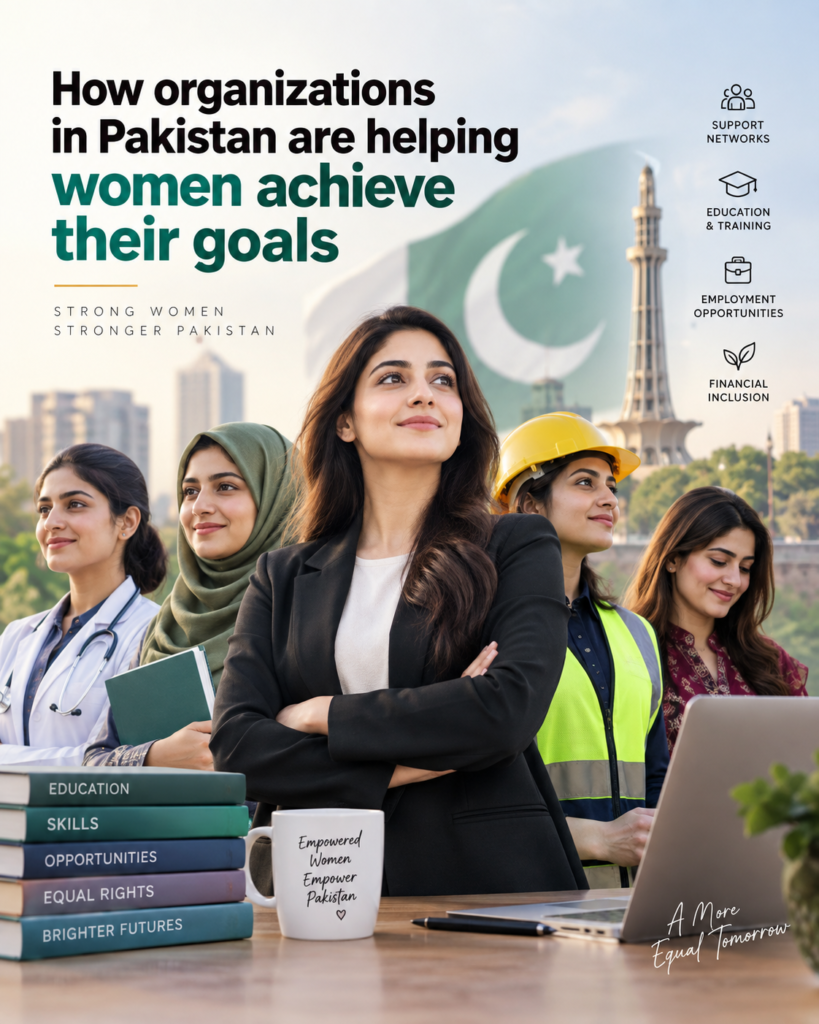
How organizations in Pakistan are helping women achieve their goals
It is the 21st century, and we no longer live in the Stone Age. Gone are the days when there used to be only one woman in an office, and the rest of the staff was all male. Nowadays, women take different roles in different fields and progress accordingly.
Organizations working in Pakistan for the safety of women
Both the private and some state-owned organizations offer programs for working women and show how they can enhance their public skills. These entities are giving power and skills to today’s women to bring them in line with their male counterparts. Organizations like the United Nations (U.N.), Kashf Foundation, Benazir Income Support Programme (BISP), and many others are helping women achieve their financial goals.
FOSPAH
Not only are women in the big cities like Karachi, Lahore, and Islamabad seeing their leadership skills move upwards, but also women in villages now see great opportunity in taking part in the daily activities. Similarly, FOSPAH (Federal Ombudsperson Secretariat for Protection Against Harassment) is an independent, quasi-judicial body in Pakistan dedicated to protecting women from office harassment and securing their property and legacy rights.
Lahore is a big city, and workplace harassment is common there. There are crimes going on a daily basis in this city. Recently, a private company’s hiring manager called a woman candidate for a job interview but kidnapped her when she reached there for the interview. These kinds of crimes are now common in big cities of Pakistan. Programs like the Punjab Safe Cities Project are helping the government by identifying such criminals. But more can be done to prevent daily harassment of women in business.
Sustainable Support for Women (SSW)
Pakistan is a kind of country where women are bullied in offices, schools, and even in online spaces. To prevent such incidents, more organizations can be created. One such organization is the Sustainable Support for Women (SSW), which is working round the clock to help women become successful citizens. This Multan-based organization has been protecting women for more than 10 years. They are registered with the Social Welfare Agencies Act (1961). Whether a woman lives in the village or in a city, SSW is here to assist her in all kinds of issues.
Cultural problems in Pakistan also make a woman’s progress harder. That is why Pakistan is making laws to resolve such issues. If a law is created to set aside seats for women in every organization in Pakistan, they will be able to find new job opportunities more easily. Unfortunately, Pakistan has a culture that sees women as secondary citizens, and men often hold their rights. The country gives them the right to vote, to get education, and work independently. But many women face difficulties after marriage. Their partner does not always allow her to work outside of the home, and it is seen as disrespectful to the family when a woman goes out to earn cash.
A male member is mostly seen as the main breadwinner of the house, and a woman is supposed to work in the kitchen or do other household activities like cleaning, washing clothes, greeting the guests, and other such domestic work. But time is slowly changing, and men are becoming aware of the reality that without women’s participation, a society cannot achieve its objectives.
Men should make proper laws in the offices to implement women’s rights. On the other hand, options are available to women to start their own businesses. Organizations like the Akhuwwat Foundation are helping women get loans for starting businesses in Pakistan.
Before the advent of Islam, women were treated very poorly. Their condition was almost unbearable. They faced cruelty and disrespect not acceptable to human norms. In the society, there was no fate for a woman. She never became the owner of anything during the old eras. In this regard, every nation had its own rules. For example, in the Arab world, a female child was buried alive. In Hinduism, a woman was seen as a selfish person. In Rome, a woman was seen as a bad character. During such an era, when women were seen as animals and separate from humanity, the Quran explained how men and women are both equal in society.
CIRCLE Women
In Pakistan, 62% of employees at work do not have any education or technical knowledge of the work they are doing. 74% of people do not have any market knowledge; 4 million-plus people enter the workplace without any kind of relevant skill. 27 women die every day of preventable diseases. There are organizations in Pakistan like CIRCLE Women that are working to resolve these issues by providing women with digital and other skills. CIRCLE is a women-powered organization that implements Artificial Intelligence (AI) for improving the lifestyles of women.
WISE Women
Another such organization is WISE Women, which implements the right strategies to improve the lives of women and promote gender justice. It uses women’s movements at national and international levels to help them achieve their goals in society. Then there is the Women’s Empowerment Group, which works day and night to achieve an equal and just community for women in our society. This organization has a vast experience in helping women achieve their rights.
From becoming a CEO to taking a political position, today’s woman is breaking the traditional barriers to do things the right way. The main thing that is helping women achieve these things is education, which is the fundamental right of every woman.
The healthcare in Pakistan is also not women-friendly, and organizations like SSW are helping to improve this sector for women. By addressing the root causes of issues in our society, along with subjects like violence against women, life skills, and other such challenges, we can easily overcome the challenges facing women in today’s patriarchal society.
White Ribbon Pakistan
One organization is the White Ribbon Pakistan, which mobilizes men and boys as active partners in the effort to eliminate all forms of violence against women and gender-based discrimination. Through targeted awareness campaigns and sustained community outreach, they strive to challenge deeply ingrained discriminatory norms and foster a culture rooted in mutual respect. Their mission is to reshape the societal narrative around women, replacing deep-rooted biases with a renewed dedication to gender equality and the safety of all individuals.
Inspiring Women PK
Inspiring Women PK offers a range of workshops designed to equip students with the essential skills needed to navigate the transition from academia to the workforce. Inspiring Women Pakistan’s bootcamps provide intensive, short-term training for women of all ages, empowering them to become confident and self-reliant in today’s fast-paced society. It offers three core programs for youth engagement: the Internship Program, the Ambassador Program, and the ETE Program. These initiatives are designed to give young women hands-on experience in real-world settings while they pursue their degrees.
AURAT Foundation
It works to improve women’s economic standing by championing their access to resources, land ownership, and dignified employment.
Ending Violence Against Women and Girls
Eliminating violence against women and girls is essential to fostering an enabling environment for women. Many organizations advocate for policy reforms and progressive legislation to eradicate violence against women, while also implementing mechanisms to support female victims and survivors. A key priority must be to work toward the complete reform of discriminatory laws targeting women and minorities.
Shirkatgah
Shirkat Gah operates across grassroots, governmental, and international levels, supporting men, women, girls, youth, and transgender communities in advancing human rights for all.
Building Feminist Movements
To generate momentum toward a violence-free, gender-equal, and inclusive future, we must cultivate feminist thought and leadership, strengthen local, national, and transnational networks and exchanges, foster a shared sense of collective identity, and engage men as allies so that women and girls can confront structural and systemic barriers at every level and in all spheres.
Empowering Marginalized Voices
It is very important to support women and girls in gaining the knowledge, skills, and expertise needed to access existing rights and services, enabling them to become empowered self-advocates for the changes they wish to see. Also, laws should be established to improve the platforms where marginalized voices can be heard. Opportunities should be created for women to exercise agency in political and public processes and decision-making, and assist mobilized communities in identifying obstacles and overcoming them through their own ideas and strategies.
Crafting Feminist Policies
An improvement is required to make Pakistan’s policymakers develop and effectively implement gender-responsive laws and policies by generating evidence and offering technical assistance. There is a need to advocate for appropriate local, provincial, and national laws and policies, monitor compliance with international commitments, and contribute to shaping a global feminist agenda for change.
In conclusion, while Pakistan has made significant strides in empowering women through various organizations, legal reforms, and shifting societal attitudes, the journey toward true gender equality remains ongoing. The collective efforts of entities like SSW, CIRCLE Women, White Ribbon Pakistan, and countless others demonstrate a powerful commitment to dismantling systemic barriers and fostering an environment where women can thrive. However, sustainable progress requires not only institutional support but also a fundamental cultural transformation—one where men and women alike recognize that gender equality is not a concession but a cornerstone of a just and prosperous society.
By continuing to educate, advocate, and implement inclusive policies, Pakistan can move closer to a future where every woman, whether in a bustling city or a remote village, can fully realize her potential and contribute meaningfully to the nation’s progress. The path forward is clear: collective action, unwavering dedication, and a shared vision of equity will ultimately pave the way for a brighter, more inclusive tomorrow.